Courts & Law

True or false: As part of the United States Constitution, the Equal Rights Amendment extends protection under the laws to women.

Not many folks enter courthouses happily – except perhaps for a marriage or an adoption. But today my family gets to do just that as we gather to witness and celebrate the public swearing-in of my brother, Tom McCloskey, as a judge of the Superior Court of New Jersey.

The United States Supreme Court opens its new term on Monday, already loaded with blockbuster cases headed for argument in the first several weeks. Some familiar issues -- voting rights, same-sex marriage, cell phone privacy, employee arbitration – will all make an appearance early in the term. Here's a quick look at what's on tap.

Six justices of the state Supreme Court will hear argument this morning in a case that just might determine their own judicial destinies, considering in Faires v. State Board of Elections whether a new law subjecting them to an up-or-down approval vote at the end of their eight-year terms – as opposed to a contested election against a challenger – satisfies the constitutional mandate that justices in North Carolina be “elected.”

Three state residents and several gay, lesbian and transgender advocacy organizations filed a federal lawsuit early yesterday morning challenging the constitutionalityof North Carolina House Bill 2, the hastily-enacted law that not only targets transgender individuals by limiting their use of public restrooms to those corresponding to their birth sex but also preempts all local nondiscrimination ordinances.

State lawmakers and governors past and present squared off at the Supreme Court yesterday over who’s empowered to make commission appointments – particularly, in this instance, to the recently created Coal Ash Commission, Oil & Gas Commission and Mining Commission. The dispute between the branches of government came to a head last fall after legislators created the commissions and authorized the House speaker and Senate president to appoint most of the members on each.

The federal courts in eastern North Carolina have been operating under a state of judicial emergency for years now, though you wouldn’t know it given the lack of a sense of urgency exhibited by the state’s United States senators. Down a judge since December 2005, the courts in this largely rural part of the state have managed one of the heavier district caseloads in the country — relying in large part on help from three senior judges: James C. Fox, age 86; W. Earl Britt, age 83; and Malcolm Howard, age 75.

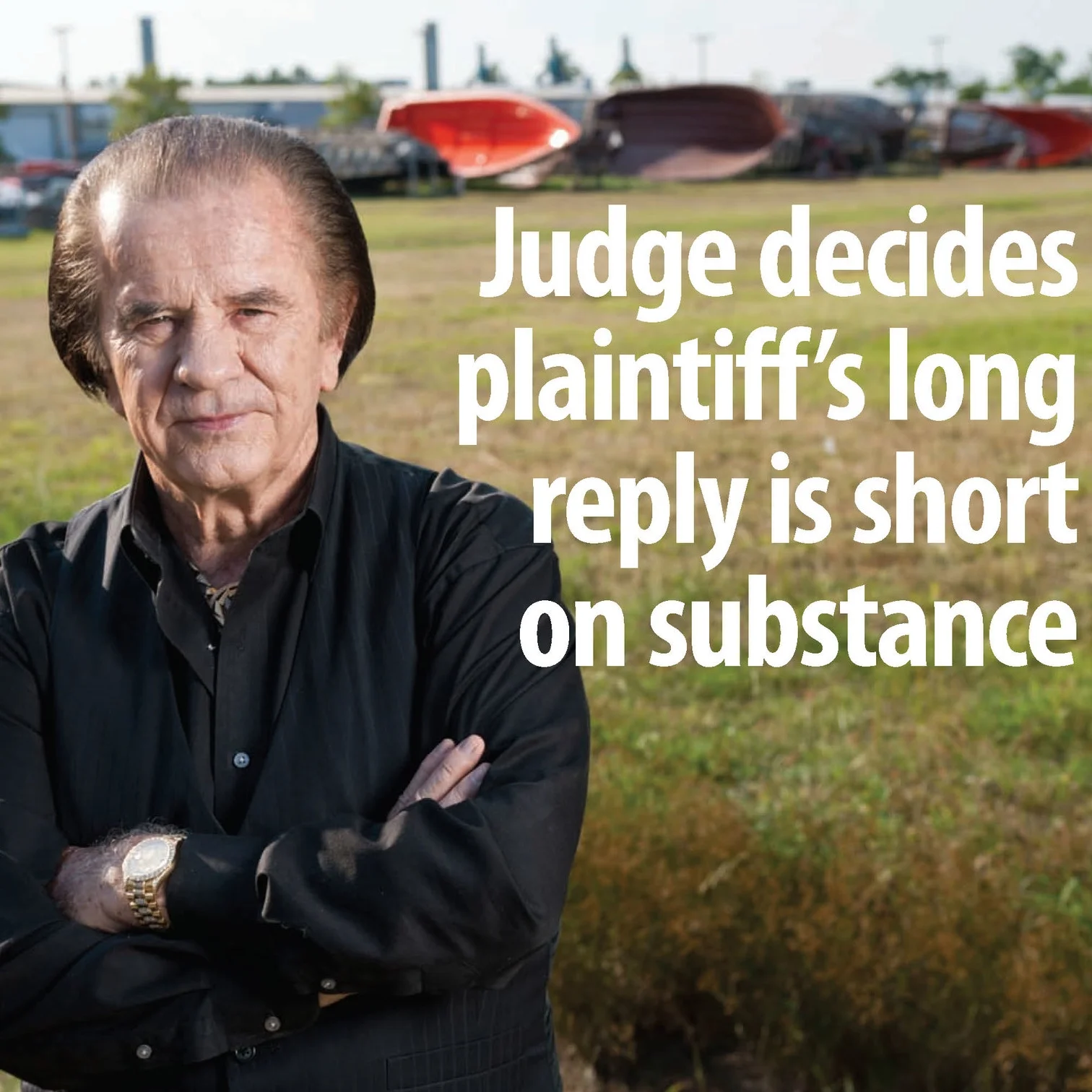
Michael Hendrix had a contract to sell eight of his 24 acres of land at Old Hollow and Germanton Roads in Winston-Salem for morethan a million dollars in early 1998. But because the state Department of Transportation had identified that land as lying in the path of a proposed beltway project running east to west just north of the city, the deal died.
& More….
True or false: As part of the United States Constitution, the Equal Rights Amendment extends protection under the laws to women.
Not many folks enter courthouses happily – except perhaps for a marriage or an adoption. But today my family gets to do just that as we gather to witness and celebrate the public swearing-in of my brother, Tom McCloskey, as a judge of the Superior Court of New Jersey.
The United States Supreme Court opens its new term on Monday, already loaded with blockbuster cases headed for argument in the first several weeks. Some familiar issues -- voting rights, same-sex marriage, cell phone privacy, employee arbitration – will all make an appearance early in the term. Here's a quick look at what's on tap.
Six justices of the state Supreme Court will hear argument this morning in a case that just might determine their own judicial destinies, considering in Faires v. State Board of Elections whether a new law subjecting them to an up-or-down approval vote at the end of their eight-year terms – as opposed to a contested election against a challenger – satisfies the constitutional mandate that justices in North Carolina be “elected.”
Three state residents and several gay, lesbian and transgender advocacy organizations filed a federal lawsuit early yesterday morning challenging the constitutionalityof North Carolina House Bill 2, the hastily-enacted law that not only targets transgender individuals by limiting their use of public restrooms to those corresponding to their birth sex but also preempts all local nondiscrimination ordinances.
State lawmakers and governors past and present squared off at the Supreme Court yesterday over who’s empowered to make commission appointments – particularly, in this instance, to the recently created Coal Ash Commission, Oil & Gas Commission and Mining Commission. The dispute between the branches of government came to a head last fall after legislators created the commissions and authorized the House speaker and Senate president to appoint most of the members on each.
The federal courts in eastern North Carolina have been operating under a state of judicial emergency for years now, though you wouldn’t know it given the lack of a sense of urgency exhibited by the state’s United States senators. Down a judge since December 2005, the courts in this largely rural part of the state have managed one of the heavier district caseloads in the country — relying in large part on help from three senior judges: James C. Fox, age 86; W. Earl Britt, age 83; and Malcolm Howard, age 75.
Michael Hendrix had a contract to sell eight of his 24 acres of land at Old Hollow and Germanton Roads in Winston-Salem for morethan a million dollars in early 1998. But because the state Department of Transportation had identified that land as lying in the path of a proposed beltway project running east to west just north of the city, the deal died.

Can a state bar a judge from personally soliciting campaign contributions from individuals and organizations? Or does such a ban violate the First Amendment by impinging on the judge’s freedom of speech?

By all accounts, the 2014 North Carolina Supreme Court race, with four of seven seats up for grabs, is destined for the record books. Already spending in the race is nearing $4 million, with a little under a month to go before votes are counted. And with public financing dollars gone, the candidates are on their own in the escalating hunt for funds.

All white and overwhelmingly male- Latest departure leaves NC federal courts among least diverse in the nation. It’s been more than 3,000 days since U.S. District Judge Malcolm Howard announced that he would be stepping down from his position on the federal court in eastern North Carolina. At roughly the same time, the then-freshman senator from North Carolina, Richard Burr, stood lecturing his colleagues on the senate floor about their blocking of votes for nominees to the federal bench.

Tucked away near the end of the 250-page Senate budget, in between the section slashing funds for legal services and the section forecasting cuts to state cultural resources, lies a proposal which would change the rules of the game in which state lawmakers now find themselves deeply entrenched: defending their laws from constitutional challenges. From voting rights to school vouchers to issues of local rule, the members of the General Assembly are fending off claims in at least a dozen lawsuits that laws enacted during the long session violate state and federal constitutions.

Steven Pruner learned the hard way that in North Carolina, selling a hot dog can get you jail time. Imagine his surprise when, in 2011, the vendor was charged and later convicted for operating his cart without a license near Duke University Medical Center – an offense which got him 45 days in the custody of the Durham County sheriff (a sentence later suspended to probation). Steve Cooksey almost suffered a similar fate when, after fighting his own diabetes and sharing insights into his recovery on his blog, he learned that his advice to readers constituted the unlicensed practice of dietetics, a misdemeanor offense under catchall provisions of the administrative code.

It started with a flickering brake light on Nicholas Heien’s Ford Escort. He was asleep in the back seat while Maynor Javier Vasquez drove the car along Interstate 77 in Surry County during the early morning hours in April 2009, when Officer Matt Darisse of the Surry County Sheriff’s Department flipped on his blue lights to stop the car. The officer told Vasquez he had pulled the Escort over for a non-functioning brake light.

It’s a troubling story line: A well-heeled and powerful group with a vested interest in the outcome of a lawsuit contributes millions to land a favored justice on a supreme court where its case will likely land. John Grisham used it in his bestseller The Appeal. The U.S. Supreme Court considered the true-to-life version arising out the battle between coal-mining executives in West Virginia in Caperton v. Massey Coal.

If there’s one message to be gleaned from the Supreme Court’s recent decision in Bumpers v. Community Bank of Northern Virginia, it’s this: When it comes to mortgage lending, consumers better shop around. And not just for the best interest rates and payment terms. Now the onus is on you, borrower, to find the best deal for all those ancillary charges that show up on that mysterious closing form – fees for the title company for example, or a loan settlement provider or even an appraiser.

With a rising number of divisive laws being challenged in courts across the country — including those addressing same-sex marriage, immigration and voting rights – some attorneys general are refusing to defend their states, agreeing that such laws are unconstitutional. Pennsylvania Attorney General Kathleen Kane announced in July that she wouldn’t defend that state’s same sex marriage ban in a pending federal lawsuit.

It started out as a simple bill allowing parties in family court to appeal rulings before their cases were finally resolved. By the time it landed on the House floor for a final vote, one of the last bills on the last day of the long session, it had a new name, a new number and a new purpose: to give the justices of the state Supreme Court the sole authority to discipline judges — including themselves –and allow them to decide if, when and who to discipline in secret.

After Paul Dacier became EMC Corporation’s first in-house attorney in 1990, he soon realized that the data storage company would need more than patents and lawyers to protect its intellectual property. It would have to become an aggressive litigant. Dacier was promoted to general counsel in 1993, the same year that Storage Technology Corporation sued Hopkinton, Massachusetts–based EMC.

It’s been nearly a decade since the New York Times profiled the 4th U.S. Circuit Court of Appeals in Richmond—the court of last resort for the vast majority of cases filed in federal courts in North Carolina, South Carolina, Maryland, Virginia and West Virginia —as “the most aggressively conservative federal appeals court in the nation.”
The ex-players who are suing the national football league for concussion-related ailments have put together their legal team, and it’s packed with mass tort all-stars.

Just a little under a year ago, Patrick Collins Inc., a California-based film company, sued 44 people for copyright infringement in federal court in Raleigh, accusing each of illegally downloading its movie, “Cuties 2.” The defendants, whose identities were unknown, all were listed as “John Doe.” Five months later, without serving a single summons, the company dismissed the case against 42 of the defendants, some of whom presumably agreed to pay a settlement. At this point, only one defendant remains: a grandmother in her 60s who hasn’t a clue about downloading files on her computer.
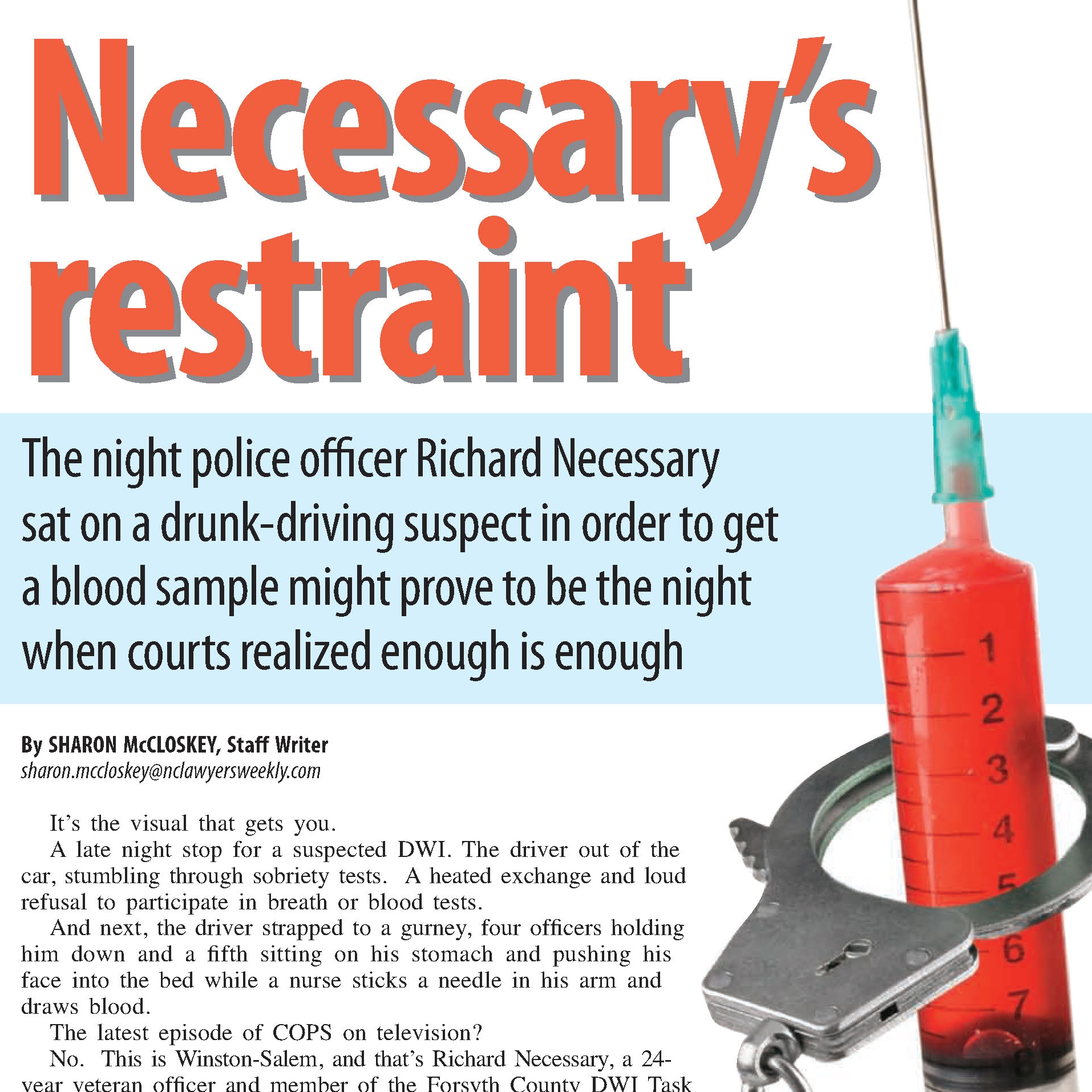
A late night stop for a suspected DWI. The driver out of the car, stumbling through sobriety tests. A heated exchange and loud refusal to participate in breath or blood tests.

It had to be done. That’s what North Carolina state Rep. George Cleveland thought last April when he introduced a bill barring courts from applying foreign law in instances where such law would lead to a violation of constitutional rights.
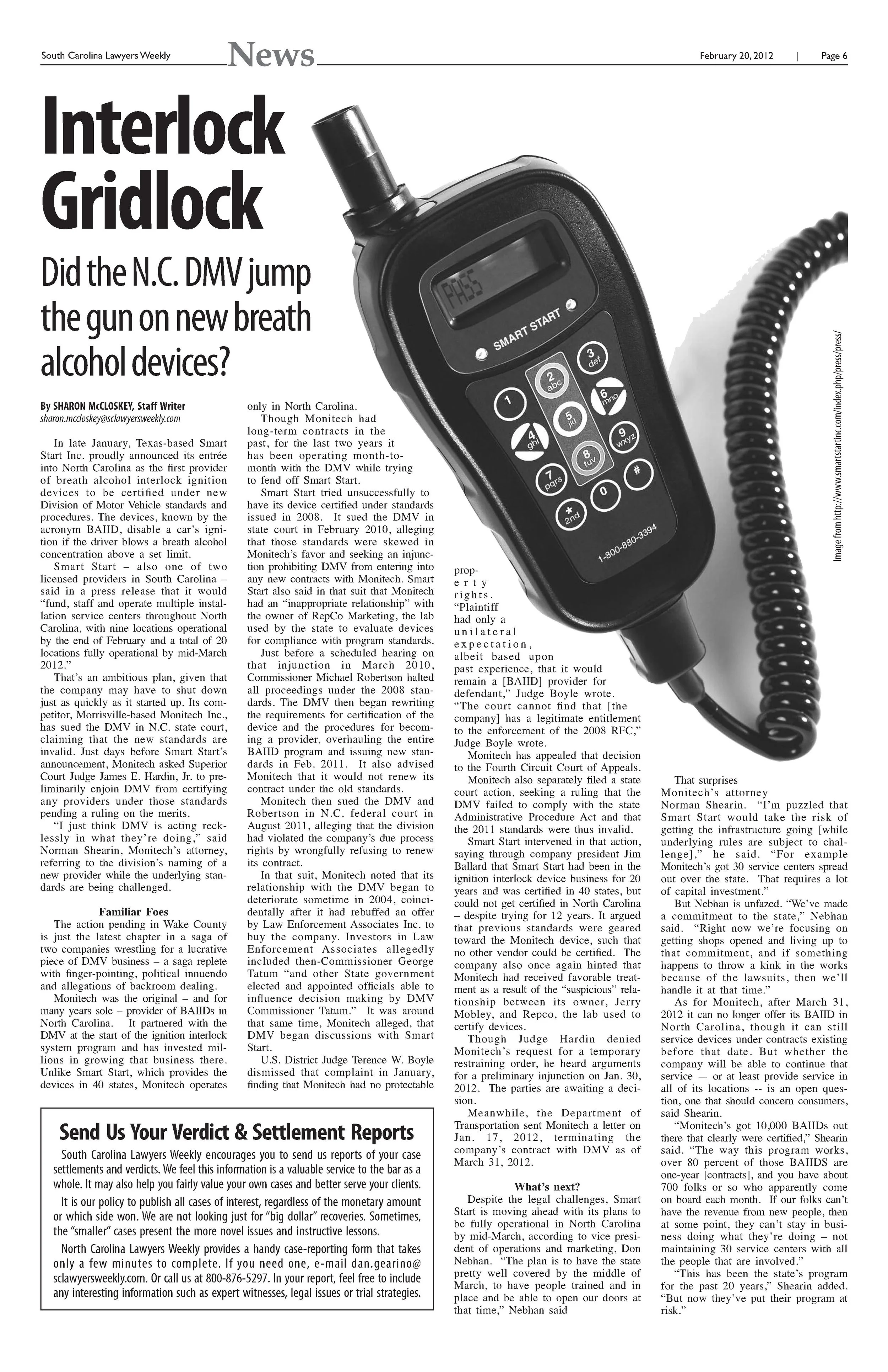
In late January, Texas-based Smart Start Inc. proudly announced its entrée into North Carolina as the first provider of breath alcohol interlock ignition devices to be certified under new Division of Motor Vehicle standards and procedures. The devices, known by the acronym BAIID, disable a car’s ignition if the driver blows a breath alcohol concentration above a set limit.
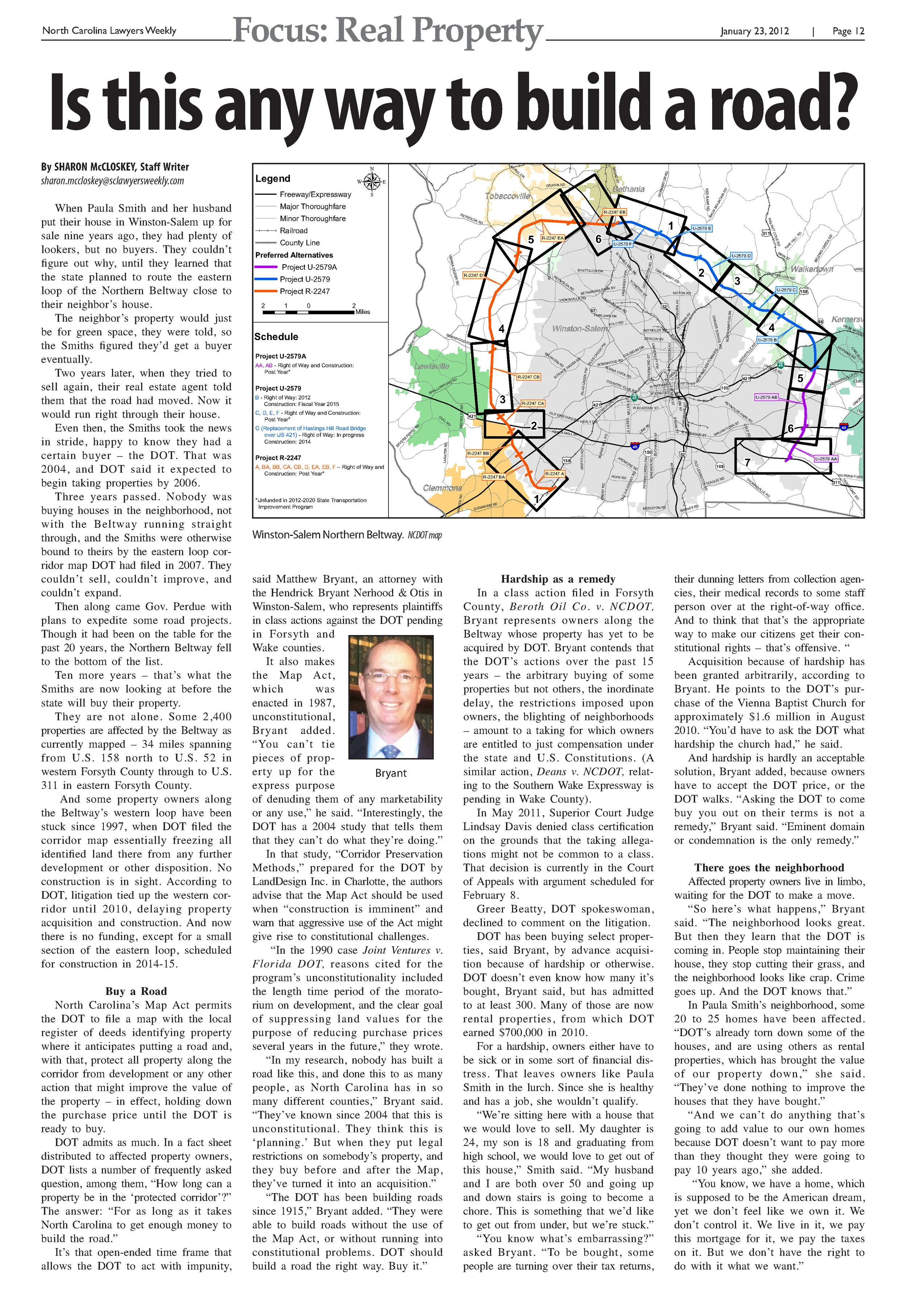
When Paula Smith and her husband put their house in Winston-Salem up for sale nine years ago, they had plenty of lookers, but no buyers. They couldn’t figure out why, until they learned that the state planned to route the eastern loop of the Northern Beltway close to their neighbor’s house.

In late December, Circuit Court JudgeRoger Couch finalized a $327 million verdict against pharmaceutical giantJohnson & Johnson for the way it marketed its antipsychotic drug, Risperdal. On or about the same day, he also gave another drug maker, AstraZenecaPharmaceutical, the green light to move forward with a challenge to SouthCarolina’s action against the company for the marketing of its own antipsychotic drug, Seroquel, on the grounds that the state attorney general’s office had compromised its independence in pursuing the case.
Lawyers for Wilmington and four other North Carolina cities challenging the constitutionality of new provisions of the state’s annexation laws are due back in Wake County Superior Court on Thursday, when they will ask Special Superior Court Judge William Pittman to block enforcement of the new laws pending a hearing and ruling on their claims. While the challenge is based on a specific legal question – whether only property owners should have a say in a proposed annexation – there’s a larger play here.