Social Justice

True or false: As part of the United States Constitution, the Equal Rights Amendment extends protection under the laws to women.

What happens when two men who'd spent more than thirty years behind bars for a murder they didn't commit are exonerated and then come into hundreds of thousands of dollars? Predators of all sorts follow.

More guns in schools, even if in the hands of the good guys, will only lead to otherwise avoidable accidents and injuries and do little to confront a mass shooter. Metal detectors may pick up a knife or a handgun, but do little to stop a gunman intent on blasting away at the entrance.
And active shooter drills? What are we doing to preschoolers when we’re hushing them quiet while pretending a murderer is on the loose? Or reminding students huddled under desks to keep their scissors open, so they can stab better?

Early estimates for the New Jersey march, held in Morristown, capped expected participation at 10,000. By some reports, that number actually exceeded 15,000.

New Jerseyans have sent just six women to the House of Representatives -- ever. That could change come November.

Navy pilots call it the helicopter dunker.
In what mimics a nighttime water crash, the pilots are strapped into a seat, blinded by opaque goggles, submerged and flipped over in a tank of water. They must free themselves from the seat, find the closed window on a mock wall and push their way out to safety.

The city of Wilson prides itself on being North Carolina’s first gigabit city, offering businesses and residents broadband services with speeds 100 times faster than what’s offered elsewhere in the state.

Conservative lawmakers in Raleigh have sounded the alarms in recent weeks over a Charlotte city ordinance extending discrimination protections to transgender individuals, including their rights to use restrooms that correspond with their gender identity — claiming a need to protect children from sexual predators.
& More….
True or false: As part of the United States Constitution, the Equal Rights Amendment extends protection under the laws to women.
What happens when two men who'd spent more than thirty years behind bars for a murder they didn't commit are exonerated and then come into hundreds of thousands of dollars? Predators of all sorts follow.
More guns in schools, even if in the hands of the good guys, will only lead to otherwise avoidable accidents and injuries and do little to confront a mass shooter. Metal detectors may pick up a knife or a handgun, but do little to stop a gunman intent on blasting away at the entrance.
And active shooter drills? What are we doing to preschoolers when we’re hushing them quiet while pretending a murderer is on the loose? Or reminding students huddled under desks to keep their scissors open, so they can stab better?
Early estimates for the New Jersey march, held in Morristown, capped expected participation at 10,000. By some reports, that number actually exceeded 15,000.
New Jerseyans have sent just six women to the House of Representatives -- ever. That could change come November.
Navy pilots call it the helicopter dunker.
In what mimics a nighttime water crash, the pilots are strapped into a seat, blinded by opaque goggles, submerged and flipped over in a tank of water. They must free themselves from the seat, find the closed window on a mock wall and push their way out to safety.
The city of Wilson prides itself on being North Carolina’s first gigabit city, offering businesses and residents broadband services with speeds 100 times faster than what’s offered elsewhere in the state.
Conservative lawmakers in Raleigh have sounded the alarms in recent weeks over a Charlotte city ordinance extending discrimination protections to transgender individuals, including their rights to use restrooms that correspond with their gender identity — claiming a need to protect children from sexual predators.

Three separate challenges to North Carolina’s 2011 redistricting plans are pending in state and federal courts here, and each is on a certain path to the U.S. Supreme Court. Whether they’ll get there in time for any meaningful change to occur ahead of the November elections is less clear though.

Conservatives rolled out the welcome mat for business when they took control of state government, making clear that unleashing companies from regulatory burdens ranked at the top of their agenda. “The reason I’m running for governor is to represent business,” then Charlotte mayor and longtime Duke Energy employee Pat McCrory told a group from the Council of Independent Business Owners during a 2012 campaign stop in downtown Asheville.

The party of less government rolled into Raleigh after the 2010 elections champing at the bit, eager to fulfill an agenda long delayed. “Regulations kill jobs” became the rallying cry, but as it turned out, that cry only went so far. When it came to voting booths, bedrooms, doctor’s offices and execution chambers, the self-styled opponents of intrusive government injected themselves in ways not seen before in state government.

Conservative justices hold a 4-3 majority on the ostensibly nonpartisan state Supreme Court and, as party operatives understand well, maintaining that edge has been critical to ensuring Republican control elsewhere throughout the state. “Lose the courts, lose the war.” Political consultant John Davis labeled this “Rule Number Five” in his 2013 report, “How the North Carolina Republican Party Can Maintain Political Power for 114 Years.”

Secret and swift. That’s what executions in North Carolina would become under a bill headed to the governor’s desk for signature. Despite recent examples of botched prosecutions here that sent innocent men to death row – Henry McCollum comes to mind – and botched executions elsewhere in the country, state lawmakers this morning adopted H774, which eliminates obstacles that have kept the state from carrying out the death penalty since 2006.

Just as the U.S. Supreme Court wraps up its term with decisions in several high-profile cases expected in late June, state and federal courts here will be gearing up for what promises to be a long hot summer for voting rights – with more to follow. Several constitutional challenges to the sweeping voting law changes enacted in 2013 head to trial starting in July and the state Supreme Court rehears the redistricting case in August.

The 1983 rape and murder of 11-year-old Sabrina Buie rocked the small North Carolina town of Red Springs and led quickly to the arrest of two area men – Henry McCollum and Leon Brown. From there the two brothers, whose IQs once measured in the 50s, withstood a trial and then four years later, retrials. They spent thirty-one years behind bars — McCollum, on death row — while attorneys pursued allegations of prosecutorial misconduct and pushed for renewed examination of evidence.

The rubber’s about to meet the road in the voting rights lawsuits pending in federal court here as the parties start to ask the hard questions. What were state GOP lawmakers’ intentions when they enacted House Bill 589, one of the most restrictive voting laws in the nation?

After 36 years behind bars, man seeks exoneration. Joseph Sledge may just have been in the wrong place at the wrong time. And for that he’s spent half of his life behind bars. Broke and unemployed in 1973, the Georgia native and Army veteran stole a few boxes of clothes from a department store and landed in a Bladen County prison. While working on a highway litter crew one day in 1976, he got into a fight with another inmate who was then punished with a stint at another prison. When that inmate returned, Sledge – a slight man of 147 pounds – feared for his life and ran.

For years now, complaints about the stench and pollution seeping from the state’s factory hog farms have lingered. In the courts and in the press, residents living with the mess and their advocates have traded barbs with industry and local leaders about failed oversight and influence in the legislature. But now environmental groups have stepped in and, in a precedent-setting complaint filed last week with the Environmental Protection Agency, allege that the state’s lax regulation of hog waste disposal discriminates against communities of color in eastern North Carolina.

Here’s what happens when a state admits a wrong but then takes years to get to reparations. Records go missing. Memories fade. People die. And the opportunity to provide at least some recompense is lost. That sad truth is unfolding now as North Carolina finally moves towards fulfilling long-promised redress to some of the thousands unwillingly sterilized here under the state’s sanctioned eugenics program.

The fate of the state’s proposed Bonner Bridge project remains hanging in the balance after the 4th U.S. Circuit Court of Appeals yesterday sent a challenge by conservation groups back to a lower court for further review. In Defenders of Wildlife v. NCDOT, the judges unanimously ruled that the lower court failed to consider requirements relating to the protection of wildlife refuge land — here, the Pea Island National Wildlife Refuge on Hatteras Island, through which the battered NC-12 runs – when determining if the project complied federal law.

Sweeping voting changes rushed into law by state lawmakers last summer will face a critical test next week when a federal judge in Winston-Salem considers constitutional challenges to their viability. On Monday morning, U.S. District Judge Thomas D. Schroeder, appointed to the court by then-President George W. Bush in 2008, will consider evidence and arguments in hearings expected to last at least a week. At issue will be House Bill 589, dubbed the “monster voting bill” by voting rights advocates and uniformly called one of the most restrictive election laws in the nation.

Shortly after the General Assembly reduced the number of early voting days from 17 to 10 as part of sweeping voting changes enacted last session, Gov. Pat McCrory took to the airwaves to defend the move. “We didn’t shorten early voting,” the governor said in a clip that went viral. “We compacted the calendar, but we’re going to have the same hours in which polls are open in early voting and we’re going to have more polls available.”

What started out last week as news of the temporary closure of the Bonner Bridge on the Outer Banks for claimed emergency repairs quickly morphed into partisan sniping, with GOP officials deflecting blame for the state’s decades-long delay in addressing environmental problems there by attacking environmentalists who’d filed a lawsuit over the bridge two years ago.

Parties in the three federal lawsuits challenging voting law changes signed into law here in August will appear before U.S. District Judge Thomas Schroeder on December 12 to map out a schedule for proceedings moving forward. And while they’ve reached agreement on some preliminary litigation matters, the parties are not budging on one critical date: when the case should be tried.
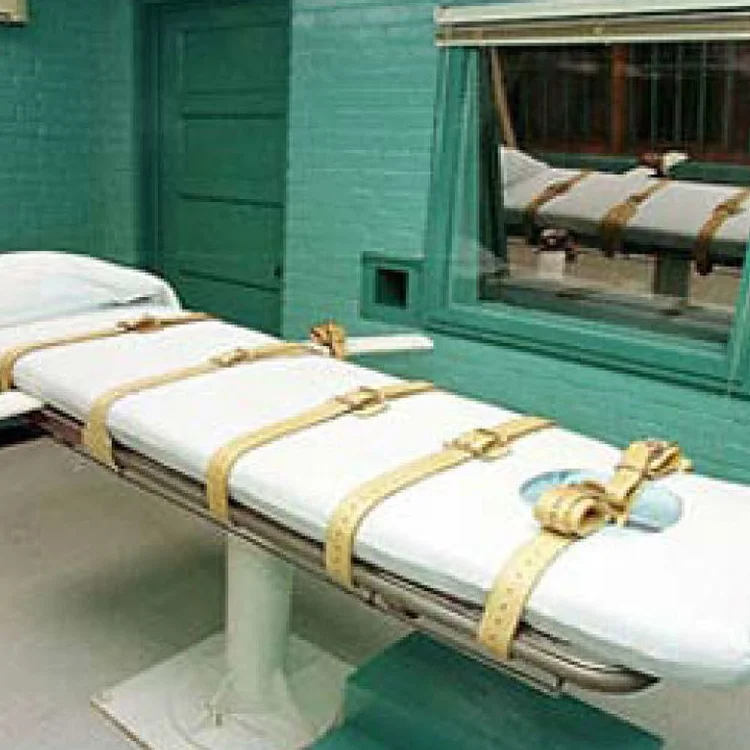
The North Carolina Department of Public Safety has adopted a new, single-drug protocol for executions, putting off tomorrow’s scheduled oral argument in the case challenging the constitutionality of the lethal injection procedures used by the state to carry out the death penalty.

State GOP lawmakers wasted no time ramping up their efforts to drastically change voting in North Carolina after the U.S. Supreme Court, in Shelby County v. Holder, gutted the requirement that certain jurisdictions get proposed voting changes pre-approved. “Now we can go with the full bill,” Senator Tom Apodaca told WRAL that same day, referring to an omnibus voting bill that

It didn’t take long for Gov. Pat McCrory to put pen to paper and sign off on the repeal of the state’s landmark Racial Justice Act, making good on his campaign promise to rid North Carolina of legislation he once called a joke.
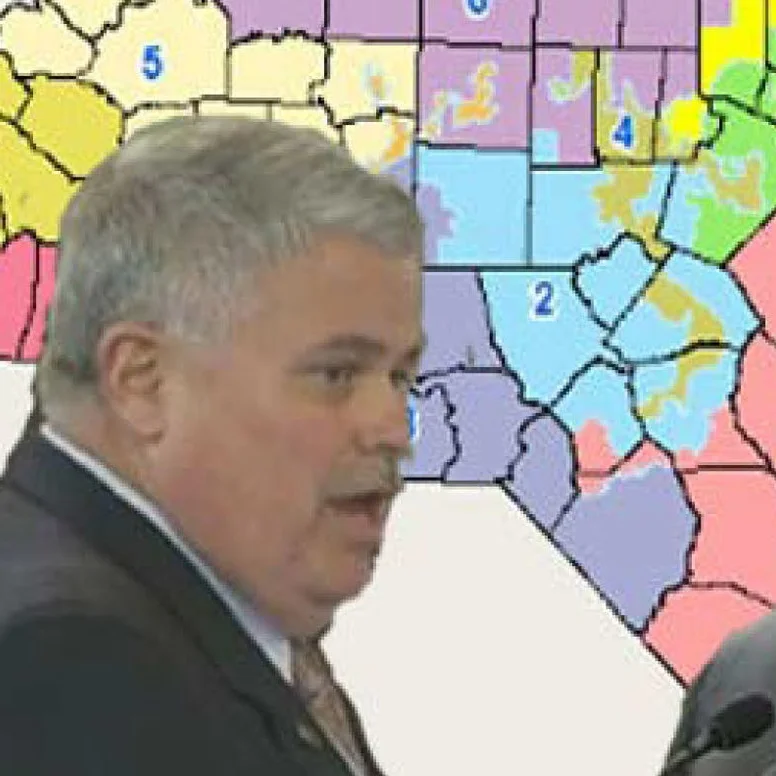
In an off year, Monday’s decision upholding the state’s 2011 redistricting plan would have run as the headline story for most dailies in North Carolina. It was still page one, certainly, but the latest chapter of our decennial redistricting litigation couldn’t compete with a legislature mired in controversy and scrambling to meet deadlines before adjourning for the summer. Instead, more Moral Monday arrests and continuing fallout from the anti-Sharia anti-abortion sneak attack led the news of the day. Not surprisingly, the legislators who won felt vindicated and proclaimed victory.

Election Day 2016: Voter photo ID. No Sunday voting. Fewer, if any, early voting days. And no same-day registration. Sound like we’re expanding access to the polls? Not in North Carolina, now that legislators have been sprung from the restraints of Voting Rights Act preclearance. Just hours after the U.S. Supreme Court in Shelby County v. Holder gutted the requirement that certain states and local governments get Justice Department approval of proposed voting changes, Republican lawmakers here promised quick passage of a voting bill that would set the state back decades. “Now we can go with the full bill,” Senator Tom Apodaca told WRAL, referring to an omnibus voting bill that would do more than just require voter ID; it would reduce early voting, eliminate Sunday voting and ban same-day registration.